
From Marketing Activity to International Pipeline: Key Metrics for Israeli B2B CEOs
7 min read
Understanding the Management Challenge in Expansion
For Israeli B2B CEOs, venturing into international markets such as the U.S. and Europe presents a unique set of management challenges. As these leaders navigate the complexities of global expansion, they often confront a paradox between their marketing activities and the actual business metrics that reflect their operational effectiveness. The need to invest significantly in marketing is clear; however, the disconnect between marketing success and business performance metrics is a critical issue that demands attention.
One of the primary challenges arises from the inherent differences between domestic and international markets. CEOs are often faced with the task of translating their understanding of local consumer behavior and market dynamics into strategies that resonate within foreign contexts. As a result, while they may achieve notable marketing milestones, such as heightened visibility or increased engagement online, these achievements do not always correlate with tangible business growth. This gap can lead to confusion over what constitutes a successful expansion.
Furthermore, the reliance on various marketing metrics can obfuscate the true indicators of operational health. CEOs may receive reports showcasing leads generated or social media engagement rates, which can create an illusion of success. However, these figures must be understood in the context of conversion rates and actual revenue generation to accurately assess progress. This complicates strategic decision-making, as it can skew priorities towards marketing efforts at the expense of developing core operational capabilities.
To address these challenges, it is essential for Israeli B2B CEOs to establish clear metrics that align marketing activities with overarching business objectives. By doing so, leaders can create a more coherent strategy that not only accounts for marketing efforts but directly ties these activities back to the company’s performance in international markets. In this way, they can better gauge the effectiveness of their expansion efforts and make informed decisions that facilitate sustainable growth.
The Importance of Qualified Opportunities
In the context of B2B sales, a qualified opportunity is a potential client that meets specific criteria indicating they are likely to convert into a paying customer. Unlike mere leads, which may merely show some interest, qualified opportunities have a higher likelihood of resulting in a sale due to their clear alignment with the company's offerings and demonstrated intent to purchase. These criteria often include aspects such as the prospect's budget, authority, need, and timeline, commonly referred to as BANT.
For B2B companies, understanding the significance of qualified opportunities is crucial. These metrics not only help businesses to prioritize their resources but also streamline sales efforts towards prospects that are most likely to convert. This focus on quality over quantity shifts the conversation from lead volume—which can often mislead companies into thinking they are performing well—to a strategy centered on fostering genuine business relationships with high-potential clients.
Tracking qualified opportunities has a direct impact on the overall sales pipeline. When organizations prioritize these prospects, they can allocate time and resources more efficiently, leading to shorter sales cycles and increased revenue. Moreover, it allows sales teams to tailor their approach to align with the unique challenges and needs of each qualified opportunity, thereby enhancing the likelihood of a successful conversion.
In today’s competitive market, where B2B organizations are inundated with information and potential leads, the ability to discern and focus on qualified opportunities becomes a differentiator. By optimizing their sales pipeline with qualified prospects, companies can enhance their efficiency and effectiveness, ultimately leading to sustained growth and success.
Key Questions to Measure Marketing Effectiveness
For B2B companies, assessing the effectiveness of marketing strategies requires a deep dive into several essential questions. Addressing these inquiries is critical for companies, particularly those operating in the Israeli market, as it helps in understanding how well their marketing activities are resonating with their target audience.
Firstly, companies must evaluate how the market is responding to their marketing efforts. This involves analyzing both quantitative and qualitative data to gauge customer reactions and behavior. Are potential leads engaging with marketing materials, and if so, to what extent? Understanding the conversion rates and the quality of leads generated from various campaigns will provide insights into which aspects of the marketing strategy are yielding positive responses.
Furthermore, it is vital to identify which segments of the target audience are showing the most engagement. Companies must ask, are they reaching the right decision-makers and influencers within their prospective clients? Not all stakeholders are equally important, and knowing who engages the most can help tailor marketing efforts more effectively. By profiling engaged audiences, businesses can better align their messaging and resource allocation.
Additionally, it is crucial to determine which marketing activities contribute most significantly to advancing opportunities. This involves examining the pathways through which leads progress towards conversion. Are certain channels, such as social media, email marketing, or webinars, driving more meaningful interactions than others? Mapping these activities against conversion rates can yield actionable insights.
Lastly, companies must measure the overall return on investment (ROI) of their marketing initiatives. Understanding the financial impact of marketing strategies helps in refining future efforts and justifying expenditures. In synthesizing these critical questions, B2B leaders can foster a robust marketing strategy that not only attracts leads but also sustains growth in the competitive landscape.
The evaluation of marketing effectiveness has traditionally relied on several metrics, including lead volume, cost per lead, and social media engagement. While these figures can provide a surface-level understanding of marketing activities, they often fall short in delivering meaningful insights into actual commercial outcomes.
Lead volume, for instance, is a frequently cited metric that indicates the number of leads generated through marketing efforts. However, a higher lead volume does not necessarily equate to quality. An influx of poor-quality leads can mislead organizations into believing that their marketing strategies are successful, when in reality, the leads might not convert into customers. This discrepancy can ultimately result in wasted resources and misguided strategies.
Another popular metric is the cost per lead (CPL), which assesses the financial investment required to acquire a single lead. While understanding CPL is essential for budgeting, it lacks context regarding the profitability and lifetime value of a customer. A low CPL might create a false sense of achievement, but if those leads do not convert into high-value customers, the marketing initiative may be unsustainable in the long run.
Social media engagement serves as another common measurement, with metrics such as likes, shares, and comments being continuously monitored. Although these indicators may suggest a level of audience interest, they can be misleading. High engagement does not automatically correlate with conversion or sales effectiveness. It is essential for organizations to delve deeper into the actual behaviors of their audience rather than solely focusing on surface-level interactions.
Therefore, relying solely on these traditional marketing metrics can lead to a skewed understanding of a company's performance. Organizations must seek to adopt a more comprehensive approach that assesses not only marketing activities but also their direct impact on business outcomes. This shift in perspective is necessary for aligning marketing investments with long-term strategic success.
Case Study: Misleading Indicators in Action
To illustrate the pitfalls of relying on misleading marketing metrics, we examine a case study involving an Israeli cybersecurity firm aiming to penetrate the U.S. market. This firm executed two distinct marketing campaigns, each reflecting different approaches to lead generation and engagement.
The first campaign focused extensively on increasing lead volume, utilizing broad-reaching advertisements and mass outreach initiatives. As a result, the firm generated an impressive number of leads—over 1,000 within a few weeks. However, the majority of these leads proved to be low quality, resulting in minimal engagement and conversion from potential clients. Many of the leads were generated from individuals with limited decision-making authority, ultimately leading to a high drop-off rate in the sales pipeline. Despite the high volume of leads, the overall conversion rate remained alarmingly low.
In stark contrast, the second campaign for the same cybersecurity firm prioritized obtaining a smaller number of leads but with an emphasis on engagement from key accounts. This approach involved targeted outreach to organizations that fit their ideal customer profile. The number of leads generated was significantly lower, at around 200; however, a substantial portion of these leads originated from high-value prospects. Subsequently, the firm noted increased engagement levels, with several meetings and discussions advancing towards negotiation and sales. This discerning strategy not only strengthened relationships with key decision-makers but also increased the overall quality of the client base.
This case study underscores the importance of discerning lead quality over sheer quantity. Focusing on high engagement and strategic relationships with key accounts in the U.S. market led to more valuable outcomes for the cybersecurity firm, emphasizing that metrics beyond just lead generation should be prioritized in future marketing endeavors.
Redefining Success: Beyond MQLs and CPLs
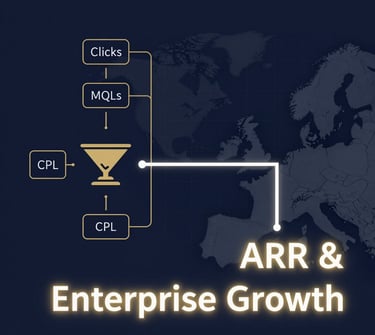
In the evolving landscape of B2B marketing, particularly for CEOs in Israel, success metrics must be re-evaluated in order to foster sustainable growth and enhance the international pipeline. While Metrics such as Marketing Qualified Leads (MQLs) and Cost Per Lead (CPL) have historically been significant indicators of marketing effectiveness, their exclusive focus can be limiting. It is essential to maintain a degree of these traditional metrics while simultaneously embracing a broader framework that offers a more nuanced view of success.
This multi-layered measurement framework should not only incorporate MQLs and CPLs but also promote the evaluation of other critical performance indicators that can provide insights into customer engagement and long-term value. For instance, metrics that track Customer Lifetime Value (CLV), customer acquisition costs relative to potential revenue, and churn rates can yield important implications regarding the effectiveness of marketing strategies.
Furthermore, this enhanced measurement strategy should consider brand awareness, lead conversion rates, and customer satisfaction scores. These metrics collectively provide a comprehensive understanding of how marketing efforts are translating into real business outcomes. CEOs must recognize that metrics reflecting buyer engagement and retention are equally, if not more, indicative of organizational success than traditional metrics alone.
As B2B companies strive to establish a global presence, it becomes increasingly important to develop a metric system that reflects complexity and variation in data. An adaptive approach allows for response to market changes and fosters continuous improvement in marketing initiatives. Simultaneously, aligning marketing metrics with business objectives secures a strategic advantage in the competitive landscape.
Building a Practical Measurement Framework
For B2B CEOs in Israel, establishing a robust measurement framework is crucial to optimize marketing activities and enhance pipeline efficiency. A well-structured measurement system will not only provide insights into market engagement but also enable CEOs to allocate resources effectively. The following actionable steps outline how to develop such a framework.
First, define clear objectives aligned with your business strategy. Understanding what you aim to achieve—whether it’s increasing brand awareness, improving stakeholder engagement, or generating qualified leads—is fundamental. Each objective should have corresponding metrics that allow for tracking and analysis.
Next, consider implementing the SMART criteria (Specific, Measurable, Achievable, Relevant, Time-bound) when creating your metrics. For instance, if the objective is to engage more stakeholders, you might track metrics like the number of interactions on social media, email open rates, or webinar attendance.
Alongside stakeholder engagement, tracking pipeline activity is essential. Metrics such as lead conversion rates, sales cycle length, and average deal size provide a granular view of the marketing-to-sales transition. Employ tools such as customer relationship management (CRM) software for real-time data collection and analysis.
Additionally, establish a regular reporting system to review metric performance. Monthly or quarterly reports can reveal trends and help adjust strategies as needed. Engage with your team to interpret the data and develop actionable insights. This collaborative approach ensures that all perspectives are considered, leading to improved decision-making.
In conclusion, creating an effective measurement framework requires meticulous planning and consistent tracking of relevant metrics. By implementing these measures, Israeli B2B CEOs can gain a clearer understanding of their marketing efforts and drive sustained business growth.